

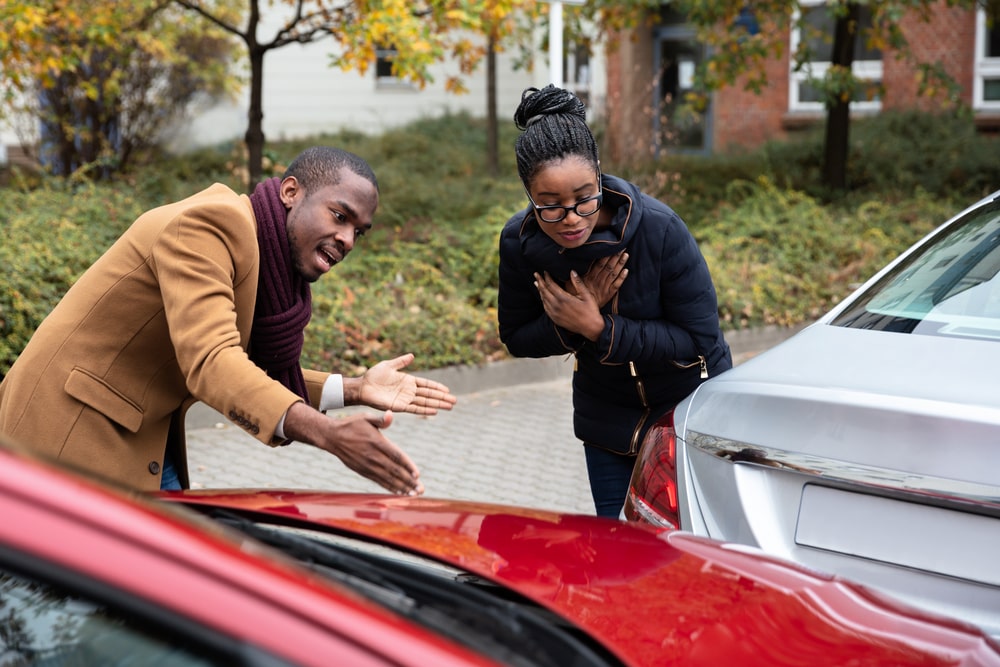
Fargo and Moorhead share a river, a commute, and the same highways, but they don’t share fault rules. A crash on one bank can be judged differently than the same crash on the other. That gap can decide whether an injured driver recovers anything.
North Dakota Bars Recovery at Equal Fault
A crash on the Fargo side falls under North Dakota law. Under N.D.C.C. 32-03.2-02, contributory fault bars a claim only when the claimant’s fault “was as great as the combined fault of all other persons who contribute to the injury.” In a simple two-driver crash, that means a driver found half at fault recovers nothing. A driver found less than half at fault still recovers, but the award shrinks by that share.
Minnesota Allows Recovery at Equal Fault
Minnesota draws the line one step later. A claimant’s fault doesn’t bar recovery as long as it’s less than the person being sued’s fault, and damages are reduced in proportion to the claimant’s share, under Minn. Stat. 604.01. So a driver who is exactly half at fault can still recover in Moorhead, while the same driver could be shut out in Fargo.
Say a jury finds a driver twenty percent at fault for a crash that caused a large loss. The award drops by that twenty percent, and the mechanics of Minnesota comparative fault rules apply the same way to every claim in the state.
Why the Location of the Crash Matters
The state line isn’t the only variable. Crashes near the river can involve drivers from both states, vehicles insured in different places, and witnesses who live on either side. Sorting out which rules apply is the first step in valuing a claim.
Drivers heading home on Interstate 94 aren’t expecting a legal question when another car pulls out in front of them, yet the answer to “where did this happen?” shapes everything that follows. That’s why a Fargo car accident lawyer asks about location before talking about value.
A Moorhead collision brings the Minnesota standard into play, so Moorhead car accident claims can look different from a similar crash a few miles west. The same driver, the same fault percentage, and the same injuries can lead to different results.
What Drives a Fault Finding
Fault percentages aren’t guesses. Insurers and courts look at specific evidence, and a few points can swing the percentage. The usual sources include:
- Who had the right of way and whether a signal or sign was ignored
- Vehicle damage patterns and where the cars came to rest
- Photos of the scene, skid marks, and road conditions
- Phone records, dashcam video, and nearby security footage
- Statements made at the scene and in later recorded interviews
Preserving that proof early helps. Statements fade, and video gets overwritten, so proving the driver’s fault starts at the scene, not weeks later.
Shared Blame Isn’t the End of a Claim
Plenty of injured drivers assume that any mistake of their own ends the claim. It doesn’t. Braking late, glancing at a mirror, or driving slightly over the limit can add a few points of fault without erasing the other driver’s much larger share. Insurers propose a percentage, and the injured driver can push back with evidence, which is how partial fault claims move toward settlement.
Commercial trucks add another layer, because the company and its insurer keep logs, inspection records, and driver files. A semi near the interstate is a different fact pattern from two passenger cars, and a Fargo truck accident lawyer knows to ask for those records early.
How We Look at These Cases
At Bennerotte & Associates, P.A., we’ve represented injured Minnesotans since 2007, and Thomas Bennerotte has handled plaintiff-side cases since 1991. Our attorneys have negotiated with major auto insurers and tried car crash cases before juries across Minnesota. We start by working out where the crash happened, who insured each vehicle, and which comparative fault rule governs.
Sorting Out Which Rule Applies
If you were hurt near the Red River and an insurer is pointing at your share of the blame, the first questions are which state’s rule applies and how close the fault numbers really are. You can reach out to us to go through the evidence and hear how a Fargo car accident lawyer would value the claim under the rule that actually applies.
