

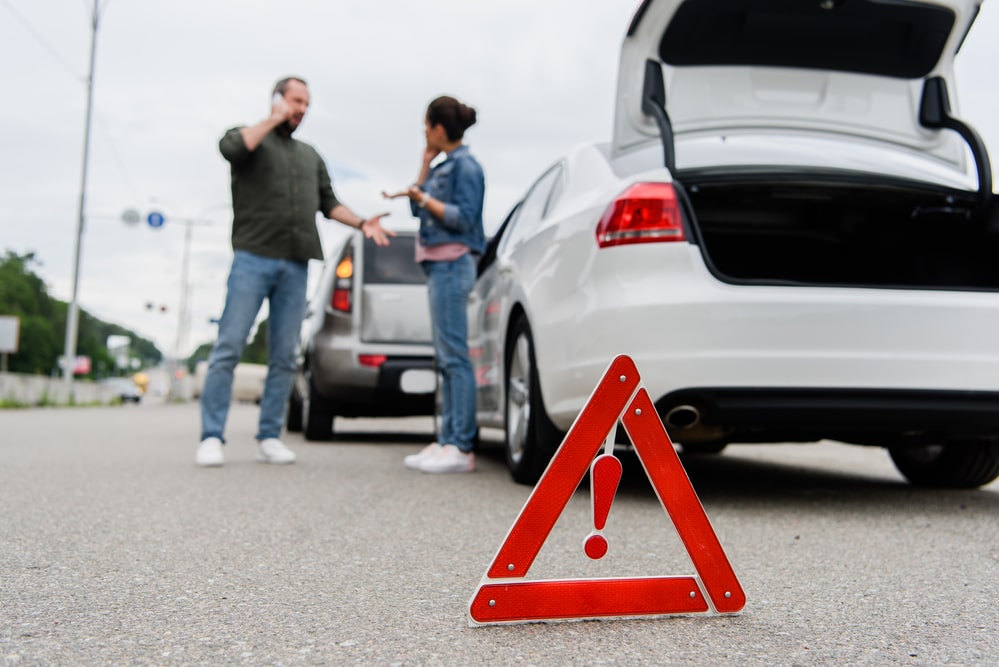
Minnesota law gives every driver involved in a collision a set of duties that begin the moment the vehicles stop. What each driver does in those first minutes can shape the injury claim that follows.
Stopping and staying at the scene
Minnesota Statutes section 169.09 requires the drivers in a collision that injures or kills someone to stop at the scene or as close to it as possible. A driver must stay there until the required information has been given to the people involved.
The same section also requires the driver to stop without needlessly blocking traffic, and the driver must make a reasonable effort to learn what was struck. Leaving the scene of an injury collision carries criminal penalties under the same section, and they rise with the harm caused.
A driver who leaves instead turns the collision into a hit-and-run crash. The injured person is then left to identify the driver from whatever evidence remains.
Information a driver has to give
When a driver knows of an injury or of damage to someone else’s vehicle, the same section requires the driver’s name, date of birth, mailing address, and license plate number. The driver must also show a driver’s license, if available, to an officer at the scene on request. Reasonable aid is mandatory. That duty covers anyone who is hurt in the collision.
Those details become the starting point once an insurer begins working out how fault is determined in a Minnesota crash. A name and plate number let an injured person tell the insurer exactly which driver and vehicle were involved.
Insurance details after the scene
A driver who did not share insurance information at the scene has 72 hours to provide the insurer’s name and address and the local agent’s information, under the same section. Either someone involved in the collision or an investigating officer can make that request.
An injured person who isn’t sure the exchange was complete can compare notes with a St. Cloud car accident lawyer before giving a recorded statement to any insurer. The scene details and the later insurance information together show who must answer for the damage.
Hitting an unattended vehicle
A driver who damages an unattended vehicle must locate the owner or driver, report the information to a peace officer, or leave a written notice in a conspicuous place on the vehicle, under the same section. The notice carries the driver’s name and address and the registered owner’s information.
Property damage is only part of the picture when someone is hurt in the same collision, and the written notice can become one more record in St. Cloud personal injury claims. Any police report goes in that file too.
Notifying the police after a crash
A driver whose collision injures or kills another person must notify the police by the quickest means available, under the same section. The right agency depends on the location, with city police inside a city, the State Patrol on a trunk highway, and the county sheriff’s office everywhere else.
Under the same section, the investigating officer reports the crash to the Commissioner of Public Safety within 10 days. A pedestrian struck by a driver faces the same questions about who the driver was and who insures the vehicle in St. Cloud pedestrian accident claims.
Details worth collecting at the scene
A short list helps confirm the exchange was complete:
- The other driver’s name, date of birth, address, and license plate number.
- The insurer’s name and the local agent’s name, if the driver supplies them.
- Pictures of vehicle damage, skid marks, and posted signs.
- Names of any witnesses who stopped at the scene.
A written note made the same day gives an injured person a record that doesn’t depend on recollection. It can record each item on the list above along with the time and location.
Thomas R. Bennerotte founded our firm, Bennerotte & Associates, P.A., and has worked in personal injury since 1991. He represents people hurt in car accidents, truck accidents, motorcycle accidents, dog bites, and slip and fall injuries.
Why the duties matter to an injured driver
The statute sets a baseline that every driver has to meet. A driver who skipped a step leaves the injured person with fewer records to build a claim from.
Injuries can surface days after a crash, and injuries that appear later make the early record more valuable. Photos and notes made at the scene preserve what the drivers exchanged and the road conditions.
Anyone hurt in a St. Cloud collision who is unsure what the other driver was required to do can reach out to a St. Cloud car accident lawyer about the next step. The answer depends on which duties were met and which were not.
